The Best Handful of Tips 5 – Training Secrets
Having run training workshops in many countries I have had fun trying out new training ways.
At the Singapore Institute of Management I ran 31 workshops. Due to their evaluation programmes I was able to experiment with different training ways.
I now have a chance to share my experiences with you.
As we age our hearing, sight and physical reactions decline. Learning can be slower so allow extra time when teaching new tasks to older adults. There is no lessening of the ability to learn as we age.
Your first job is to find out what people already know. Then find out what they want to know or need to know. You can then develop a challenging and enjoyable programme relevant to their needs.
Never forget, people learn best when they are enjoying their training.
Five of the best tips to help adults learn new tasks
1. Get people involved in planning their own training
List topics and let them help select what they need to learn and which topics are the most urgently needed.
People have many experiences to share and like to contribute.
2. People learn best when they know they need new skills
Arouse interest to encourage people to want to learn.
Structure training around tasks relevant to work needs, to problem-solving, or life situations.
3. Make training challenging and enjoyable
Lecturing is one of the most ineffective way to train, so keep talks to a minimum.
People enjoy training games and challenging competitions.
Set up teams and let the teams compete for solutions to problems or new ways to work. Give small prizes for the best results.
Encourage participants to express their opinions and have lively discussions.
4. Use a variety of training methods
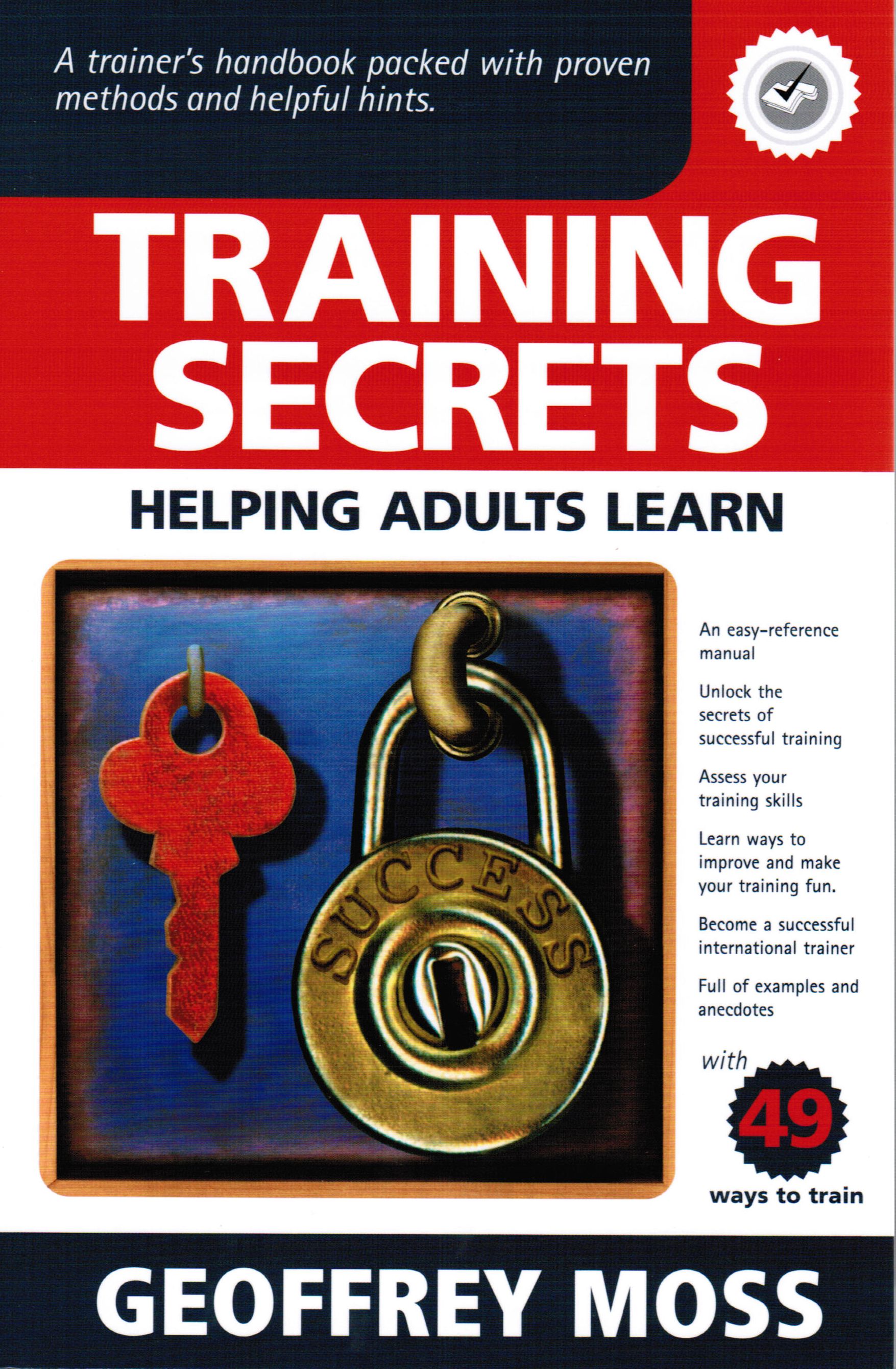
People will learn more quickly if you use different training ways. Use group discussion, role playing etc. with plenty of good visual aids. (See “Training Secrets – Helping Adults Learn” for different ways to train. ISBN – 0- 9583538-8-3)
5. Short bouts of learning are better than one long session
Short repetitive training sessions can help reinforce learning. Long sessions can be very tiring and boring.
Short repetitive training sessions can help reinforce learning because they have more impact and relevance.
Keep asking; “What did we learn at our last training session?”
If people start to wilt during training sessions take a break. Play a ball game, let them go for a walk or a swim, or break for coffee. Do something different, so they return refreshed and keen to continue.
– Geoffrey Moss
mossassociates.co.nz
 Another Handful of Tips