Who is in charge of training in your organisation?
Top management is responsible for the day-to-day running of an organisation and for its long-term planning and development. It should also be responsible for an active training policy, not a role to be delegated to others.
Managers and leaders should be involved in planning training. Without their full support, encouragement and follow-up, expensive training can be wasted.
Five of the best tips for an effective training policy
*Training must support the organisation’s long-term objectives and goals
There must be an active long-term training policy fully supported and encouraged by top management.
Training should include creative and lateral thinking – linked to real business situations.
*There must be an adequate training budget
Training must be considered a budgeted item like travel and sales.
Suitable locations and resources for training must be made available.
Top management must turn up, encourage and be seen frequently at training sessions.
*Sufficient time must be allocated during working hours for the required training to be carried out
*Competent people must be available to carry out training
Respected experienced staff should be skilled in the art of training. Don’t bring in outside trainers.
*Training needs to be constantly evaluated
Training needs to be economically effective.
Time spent at training sessions means loss of work time. Therefore all training activities should be worthwhile and benefit the worker and the organisation.
Today business is all about performance, productivity and accountability and trainers must be held to account.
–Geoffrey Moss (mossassociates.co.nz)
“Experience is the best teacher but today, time and technology must be taken into account.”
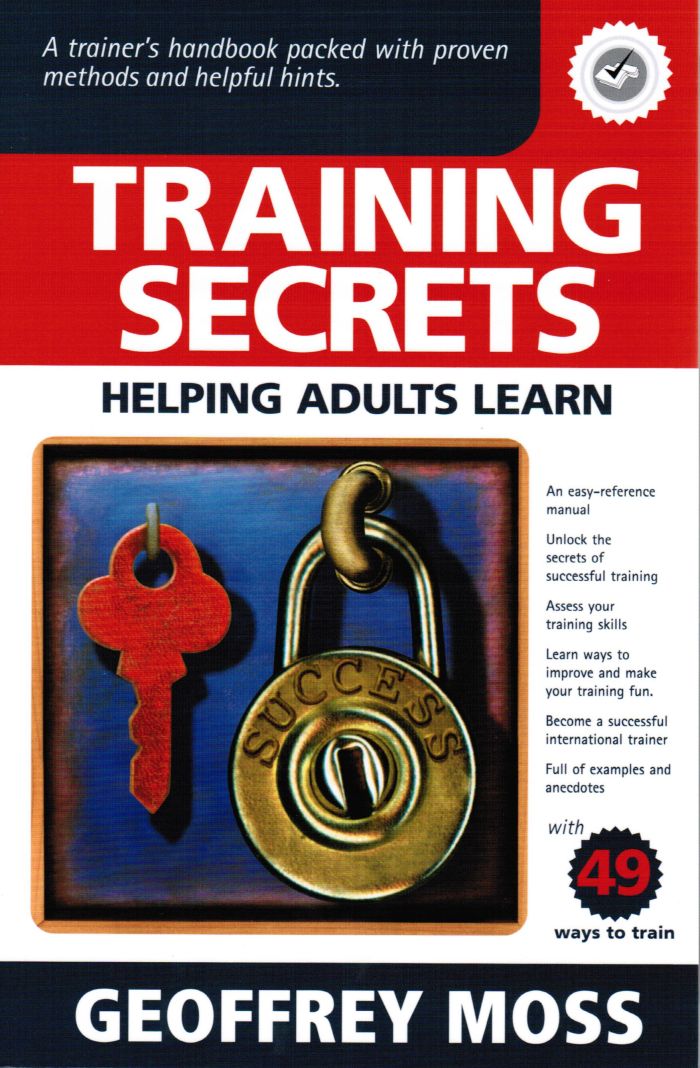
SOURCE: “Training Secrets. Helping adults learn” 190p., Moss Associates. Ltd, New Zealand and Cengage Learning Asia, Singapore. Also available as an e-book from Amazon.com. Learn 49 ways to train and how to assess and improve your own training skills.
 Another Handful of Tips