SUPERVISION –
Be a Good Team Leader
In the past , supervisors in organisations were controllers of activities. In today’s work climate, the supervisor is being replaced by the team leader who delegates controls to others. They now become the coordinator of activities.
Autocratic supervisors must be retrained to become democratic leaders.
A good team leader knows how to involve their people in team efforts. They pay attention to details and standards and are able to delegate responsibilities.
The art of leadership is to get people to do what you want done because they want to do it.
A Handful of Tips to help you become a good team leader
* What is expected of employees?
Employees must always understand their role and what is expected from them.
* To whom are they responsible?
Employees must be clear who is their direct line manager. There must be only one person – not half a dozen!
They must have guidance in doing their work and must know who they can turn to for advice.
* How are they performing?
People have the right to know how they are performing in their work. Regular feedback from their team leader is essential.
Good work should be praised in public. Poor work criticised privately.
* How can they improve?
People have a right to improve themselves. They should be well trained and should be encouraged to improve themselves.
Leaders need to coach and encourage work teams just as you would a sports team.
Training will be more meaningful if the trainees are challenged by activities that end up in a sense of achievement and a pride of accomplishment.
* A safe and healthy environment
People should work in a safe and healthy environment and it is the duty of team leaders to see this occurs.
Geoffrey Moss(mossassociates.co.nz)
“Do as you would be done by.”
For those in need, download our FREE book “NO JOB! WHAT NOW? available from our website.
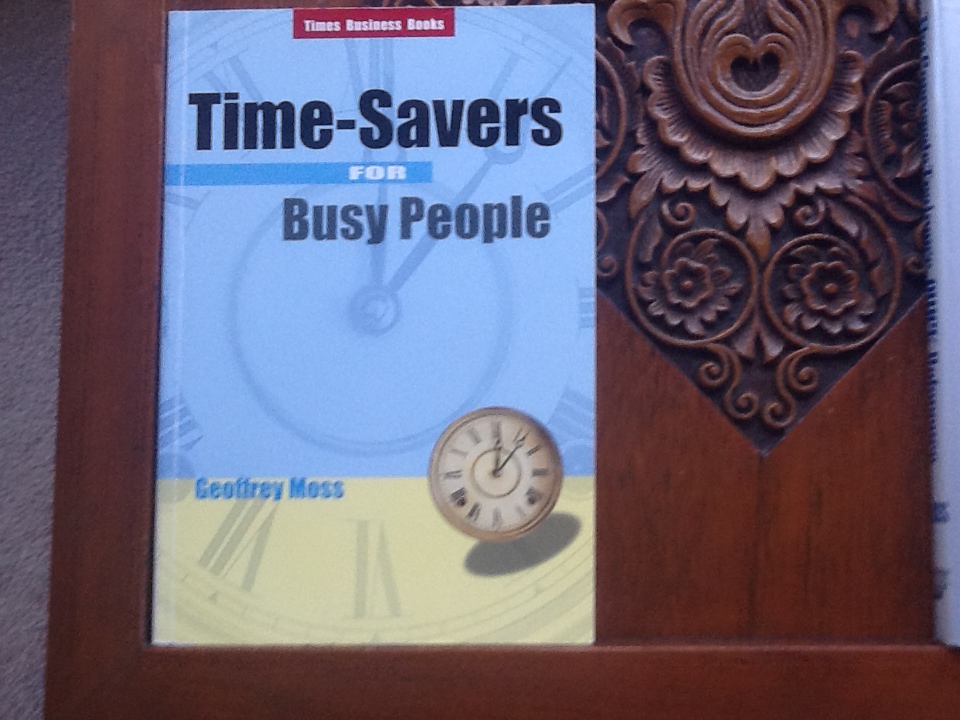
Source: Time-Savers, Moss Associates . Ltd, New Zealand; McGraw-Hill, Australia; Times Business Books, a Federal Publishing House, Singapore and Qingdao Publishing House, China.
 Another Handful of Tips