When I was first asked to present a paper at their annual conference at the Food and Fertilizer Technology Center, for Asian and the Pacific, in Taipei I was flattered to have been asked. I was curious to find out how this country had been turned around from a food importing country to a strong exporting country so I accepted, and prepared a paper for presentation.
I slipped away without telling too many people where I was going. At that time New Zealand was wooing mainland China as it was a country with a larger marketplace for our products than Taiwan.
On my first trip to Taiwan, I stopped overnight in Hong Kong and then flew to Taipei late the next day. Before arriving I was instructed to put a gold sticker on my lapel. I didn’t know why.
When the plane touched down the pilot announced; ‘Please remain seated until I give the word to exit.’
We stopped , and a man boarded. He saw my gold sticker, collected my hand luggage, and shepherded me out straight through customs and immigration waving a piece of paper.
He introduced himself as John Feng from the Food and Fertilizer Technology Center.
After passing through the airport I found I was standing on the platform outside. I was all alone while John went to fetch his car. It was getting dark and there was not another soul. The place was deserted – not even a taxi.
When he returned he handed me a smart-looking business satchel and he said; ‘You will find copies of all the papers for our meeting in this bag. Your accommodation details are listed. You are expected to pay all your expenses while you are in Taiwan. Is that ok? But you will find there is enough money to cover all your expenses. There should be a little bit left over to buy a small souvenir to take home. ‘
I found all the papers to be presented were printed and bound. The speaker’s role was to read his paper and answer questions. Any asides were noted and written down. I found this hard, – all I could see was the tops of heads as the audience was reading with me. Following our formal meetings, we were bussed about for a few days to inspect some of their research facilities.
Did I find out how Taiwan turned the country into a food exporting country? Yes, I think I did. Firstly, they started selecting and encouraging suitable children in schools to take up a rural career. Then they gave them farm school training in practical skills.
Government advisors selected suitable farmers and leased 10% of their land. They supplied all the inputs and told the farmers what to do. When the crops were ready for harvest they held field days and invited neighbouring farmers to inspect why their yields were so much higher than the rest of the farm.
These were backed up by solid research, good extension workers, and communication systems using newspaper and magazine articles.
I found their research was of a high standard. For example, the Taichung Agricultural Improvement Station produced the first high-yielding semi-dwarf rice plants. They claimed they started the Green Revolution. The tea research institute was impressive, as was the fishing village containing a fishing museum and research center.
One that impressed me the most was the pig farm attached to the Pintung Sugar Mill and research center. It was set up when the price of nitrogen fertilizer was high. It was far better than any pig farm in New Zealand.
When we visited it was slaughtering over 710,000 pigs a year.
The pigs were fed largely on sugar plant wastes and the washings from the pigs were used to fertilize the sugar plants.
The pigs were housed in concrete-floored buildings with concrete floors sloped down to a drain. The pigs were showered twice a day to control their temperature and to keep the floor clean. Visitors were subjected to very strict hygiene control. White coats, rubber footwear and we walked through chemical foot baths.
We had some outstanding feasts as we traveled around this country. In one little fishing village, we had the best seafood meal I had ever eaten. I still remember the lightly cooked oysters served on a crispy bird-nest type of batter. They were delicious. One of my last meals was memorable for another reason.
We were staying in a forestry research station up in the mountains. Our party was catered for by the native people of Taiwan. (They have a similar gene type to the people of the Pacific, including the New Zealand Maori.)
A lot of special rice wine was drunk that night. There was much singing and revelry and much ganbeing. This is a Chinese toast. It means dry cup. You are expected to empty your cup after each toast is given.
I am an early riser. I made a cup of tea, with my faithful electric jug, and I took off for a walk into the forest. It was a beautiful morning. After a while, I was horrified to see a tribe of very large rock monkeys stalking me. I had never seen such big monkeys before. I was scared. I didn’t know what to do.
I had a block of chocolate in my pocket so I keep tossing them pieces. The more I gave them the faster they chased me. I was so grateful when I managed to slip past them when they were fighting for a piece of my chocolate. Eventually got back much relieved after an enjoyable breakfast.
John Feng’s piece of paper was just as effective when I departed from that first visit. I was rushed past my fellow travelers queuing to have their bags searched at the airport. They eyed me suspiciously. My exit was smooth and free. For the rest of my life, I will wonder what was written on that magic piece of paper.
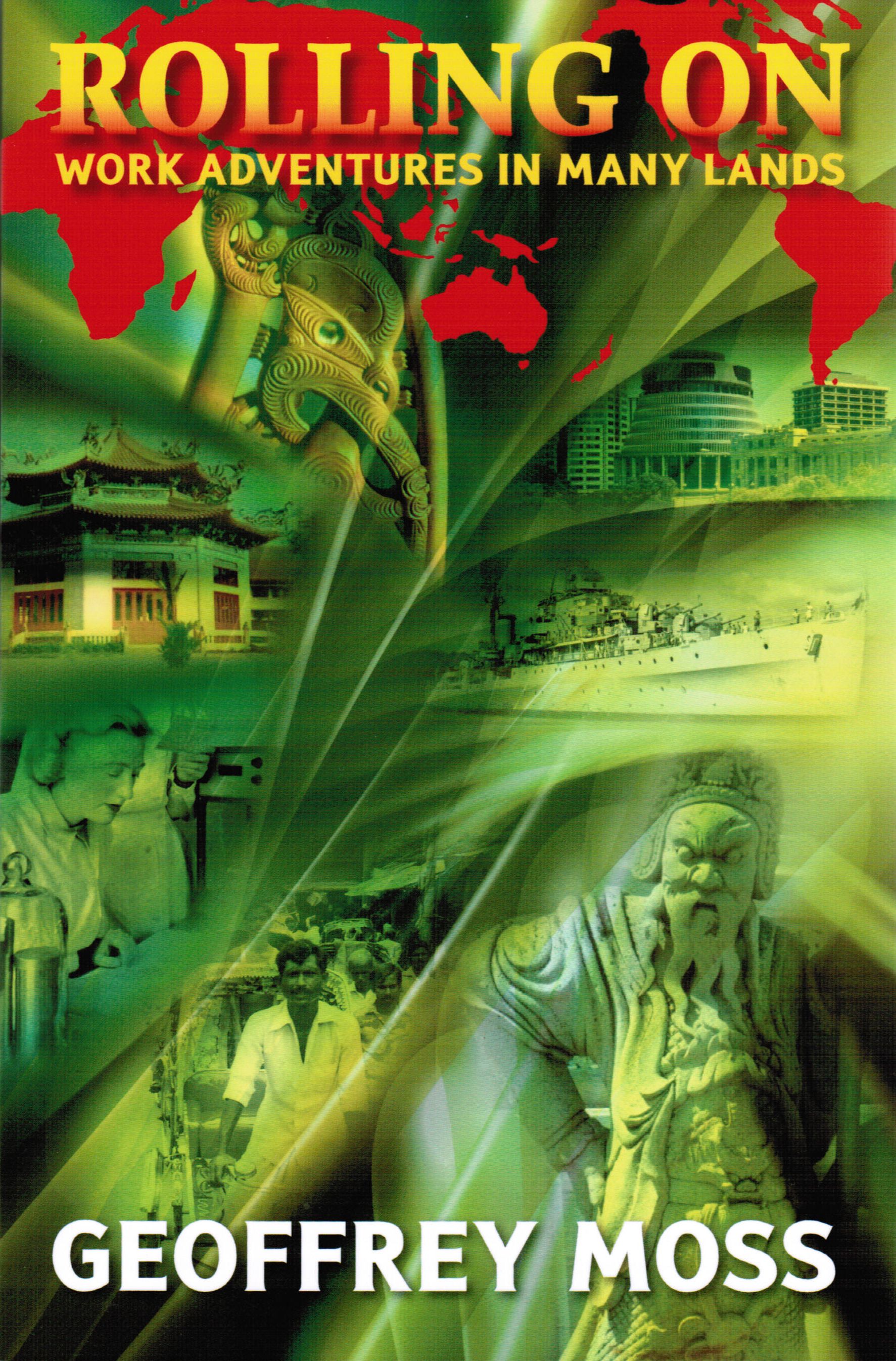
For more of my adventures in Taiwan, and in many other countries, see my FREE book, titled ‘Rolling On’ on our website.
Geoffrey Moss(mossassociates.co.nz)
 Another Handful of Tips