One day I was lunching in Bangkok with my colleagues from the UN. There was a lull in our conversation. I asked them which Asian country do you prefer to work in? Much to my surprise, they agreed on Vietnam.
As I was about to go there to do a job for UN-Habitat, I asked about the cockroach situation. Najib replied, “Don’t worry about the roaches, the rats eat them, and there’s plenty of rats.
The flight in was different. We flew in a small Russian jet. It was like a big fat cigar. It had small seats and held about 56 passengers. The luggage was stored behind the passenger seats. It was obviously overloaded.
The air conditioning was turned off before we started. During our take-off, we narrowly skimmed the fences and the plane fogged up when the air conditioning was turned on again after we got airborne.
I sat next to a man nursing a large sealed bag. he told me he was the Dutch Charge d’affaires for Vietnam. He said the various embassies took turns going to Bangkok to collect the mail.
Before we landed in Hanoi I commented to him about the large number of fish ponds I had seen out the window. He said “They are not fish ponds mate, there’re bomb craters.
I was met at the airport by Madam Xiam, the Deputy Director of the Institute for the Protection of Mothers and the Newborn. She spoke good English but had a beautiful interpreter with a most unusual name, Madam Do Dung (pronounced Zunn).
I was carrying two heavy boxes of training material. My book “Training Ways” had been translated into the Vietnamese language in Bangkok for the workshop.
I had been invited to run a ten-day training program for doctors from the medical colleges in Hanoi and Haiphong. The nineteen participants were all gynecologists or obstetricians. It was held at an old French beach resort called Hai Ar (Sea Gull) situated on a narrow isthmus some 30 minutes drive out of the city of Haiphong. Haiphong was a three-hour drive from Hanoi and at that time had a bigger population, both had over a million people.
It was a beautiful tranquil place.
Before we started we were all invited to lunch with the Mayor of Haiphong. I found this event stressful, as, without warning, I was asked to respond to a toast given by the Major.
After arriving I was given a scruffy-rundown apartment but it contained a well-stocked fridge containing fruit, beer, vodka, and apricot brandy – I was spoilt. The food during my stay was outstanding. We had things like coconut crabs, snails, and even frog legs.
I had a toilet, without a seat, and a bath full of dark water. The bath was my reservoir for washing, drinking, and flushing the toilet as there was an acute water shortage at that time. I was able to boil my drinking water with my faithful old electric jug.
I was supplied with an interpreter, Nguyen van Truong. To my surprise, he spoke Kiwi-English as he had been trained by Freda Cook a New Zealand woman, who had been in Hanoi during the war years. All the doctors were learning English but I spoke too fast so van Truong was essential. He was very good at translating. I soon forgot I had a problem. He was a heavy smoker and a keen yoga exponent – a strange combination.
The doctors were very good. They worked so hard on the exercises I had set them. They were so ashamed if they didn’t perform well.
I asked them how they were trained during the war. They told me they were trained in cells. Half a dozen people were trained in a task, and each had to train another half dozen. What a great way to train – to teach is to learn twice.
My training started each day at 7:30 and at the end of the day, we would all go for a swim in the sea. We would then go for a walk along the beach to dry off. You would be surprised at the things I heard on these walks.
One doctor told me the beach brought back painful memories. He said he had been a medic in the army. He had been in a village with 180 soldiers. They were surrounded by American troops. The village was wiped out and we had our backs to the sea. We couldn’t escape. Our officer said to get some straws to breathe through and bury yourself in the sand near the beach. We will meet again at the rocky outcrop at 1am and try to break out.
Only 20 emerged. The Americans ran their vehicles up and down the beach as soon as they realized what was happening. What a terrible war!
How privileged I have been to get into Vietnam before the country opened up to visitors after the ‘American war’ – as the Vietnamese call it.
I have visited Vietnam three times. Once to help a team carry out an audit in Hanoi, on this training trip, and once as a tourist after the country opened up.
In 1968 Joyce and I spent just eight months in the States when I was an Eisenhower Fellow. The main topic of conversation at that time was the Vietnam war. There were student anti-war-riots.
We visited a ‘Think Tank’ where war -tactics were being considered. I attended a Brooking Institute Seminar in Williamsburg held for Two Star Generals, or their equivalents. Our speakers were mainly advisers to the US President.
We dined with the Hon. William Fitz Gerald in Washington DC. He had been a U.S. Ambassador in Vietnam before the war. He had some good tales to tell.
Not many people have had the opportunities to do the things I have had. I saw the war from both sides – I am grateful.
What a terrible war! In a country slightly bigger than New Zealand. The Americans dropped more bombs on Vietnam than they dropped on Europe during the Second World War.
Over five million Vietnamese were killed or wounded and 210,988 Americans as well. Another 2,500 were missing – presumably dead. I did hear there were some American deserters living with Vietnamese families in isolated rural areas. I could not confirm this.
What a cost and what a waste and for what purpose.
As Victor Hugo once said, “Peace is a virtue of civilization, war is its crime.
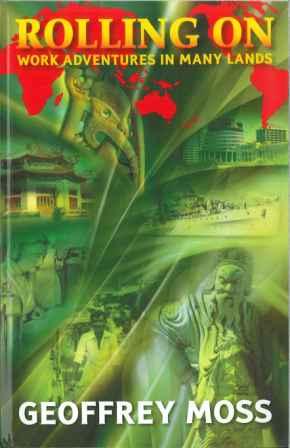
For other stories call up my website on Google. You will find them online in my FREE book titled “Rolling On – Work adventures in many lands”
Geoffrey Moss(mossassociates.co.nz)
 Another Handful of Tips