The day Dr Joe and I arrived in Colombo from Manila I phoned the President of the Sri Lanka Rugby Union, as I was their New Zealand Liaison Officer. My task was to send them New Zealand rugby coaching materials.
Kavan Rambukwelle said, “I will call for you in one hour. We have a tournament you should see.”
Having just arrived, I soon found myself sitting at the official party, sitting with the President of the Rugby Union and beside the Minister of Youth Affairs and Sport. We were surrounded by heavily armed guards and got to watch a tournament played by four leading College rugby first fifteens. They played good rugby, well worth watching.
The next morning I rose early and went for a walk. When working away from home I have my favourite walks. In Colombo, it’s along the waterfront in an area known as the Galle Face Common.
It’s interesting to meet the same touts who have been on the same beat for years. There were two well-dressed, well-spoken men who walked this beat. They fell into step beside you and enquired, “Where are you from?”After a few minutes of conversation, they explained that they were teachers at a school for the deaf. Their final act was to pull out an ‘official ‘ receipt book showing all the good folk who had made a contribution to this ‘worthy ‘ cause. They ended up with “Would you like to make a contribution sir?”
They were very convincing and professional at their job. But I had seen them at work on their beat on previous visits.
My next problem was how I was to get to Kandy some 116 km from Colombo. Because of a heavy curfew all public transport was cancelled – no busses no trains. Dr Joe recommended that I hire a taxi for a week but that sounded too expensive for my liking.
I discussed my problem with Kavan and he said he would take me to Kandy by car, as he needed to see how his tea plantation was doing after a terrorist raid in the area.
In August 1989 there was a heavy curfew due to the civil war between 10pm and 4am. The army tended to shoot on sight if people were out at night.
On a positive note, this suited the wives because it meant their husbands drank less and they got home early from social events. They also kept their cars in better condition to avoid breakdowns in the evenings.
Kavan called for me the next morning at about 5 am. We travelled with the interior light on in the car because of trigger-happy security forces.
Soon after leaving Colombo, we saw some burning houses and bodies strewn about. Kavan murmured something about the security forces having been active during the night. However, we had a comfortable four-hour trip to his home, which was about 20 km out of Kandy.
When we arrived we found terrorists had cut off the power to his house. When Kavan appeared the guard resigned on the spot as his dog had been shot and his life threatened.
The head office of the Department of Agriculture was at Peridenya, a village close to Kandy where the famous gardens and the university were situated.
These gardens had been Lord Mountbatten’s military headquarters during the Second World War and now held the head office of the Horticulture Division of the Department of Agriculture.
I was staying at the Suisse Hotel and my friend Professor Ravi Sangakkara called for me each day and took me to the university. I walked to the Department buildings and returned each evening back to the university to get a ride back to my hotel.
As soon as I arrived I.M. Gunawardena, automatically took control and organised all my appointments and transport details. He had been one of my assistants during my 1976 visit and had also stayed with us in Wellington during a training visit.
All went well. Kavan even organised a ride back to Colombo for me. I was collected by Roy de Silva the President of the Asian Olympic Committee who was heading off to a meeting.
I flew back to Manila and spent the following two weeks preparing my report for the Asian Development Bank.
On the way home I went via Darwin to visit our daughter Lynette and her partner Milton Andrews, our book designer. Milton had booked me into a small backpackers tour of the Kakadu National Park . Because I was the oldest member of the party my role was to light the fires each day to cook our meals.
I was shocked when I returned to Darwin to read in the local paper a Reuter report of the killing that had taken place at the Peradeniya University, the place I had been visiting twice a day.
It read;
On Wednesday, rebels gunned down T.E. Nagahawatte , a volunteer army captain and assistant registrar of Peradeniya University. The next day, 18 men were beheaded and their heads placed around the pond on the campus, near Kandy. The corpses were scatted.
Geoffrey Moss(mossassociates.co.nz)
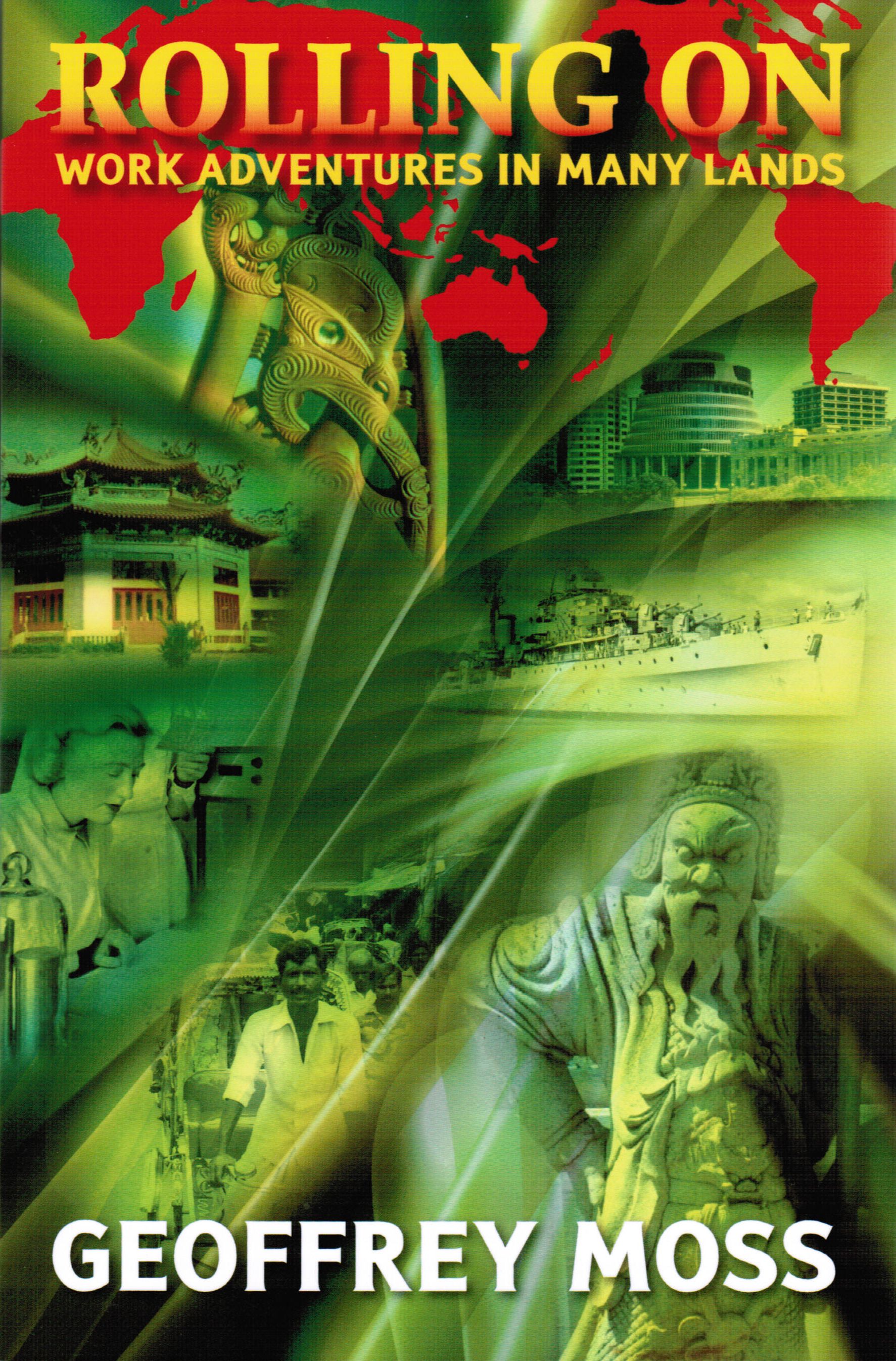
For more of these adventures download my FREE book “Rolling On”, on Google using my website.
 Another Handful of Tips