Bangladesh 1985/86
This country had a serious set back right from the start. During December 1971 the departing Pakistan troops rounded up many intellectuals and leaders and shot them, setting the country back more than a generation.
Most of the country is a huge delta formed by two large rivers, the Ganges and the Brahmaputra. There are no bridges so to cross them you line up to catch a sad looking barge towed by a launch.
During the Monsoon rains there is regular flooding, with an annual loss of life.
While I was working mainly up-country, I did carry out some training in Dhaka at the Academy of Planning and Development. My role there was to try to improve the staff teaching methods. I was trying to get them to stop lecturing by reading their notes.
One day I complained “What’s the good of spending vast sums of money building up organisations, such as this, because your universities are not relevant to the needs of the country.”
“Excuse me”, said the Principal. “But the man responsible is sitting behind you.”
What could I do but give him a smile. I put my hands together and bowed. He gave me a wicked smile in return. He was the father of one of the women staff members and had slipped in to see what was going on.
Another day the chairman of the Board was invited to see the progress being made. He was the Managing Director of Bangladesh’s largest bank and to my amazement, I knew him. He was, Abul Khair, a friend I had met in 1968 in American. He was in my Eisenhower Fellow intake . We had attended many social events together.
To my disgust, the staff all reverted to their old ways of teaching, reading their notes. It didn’t say much for my teaching.
After his visit he returned with me to the Sheraton for a chat and a drink.
I asked him where he lived. He said across the lake from the President. After coming home from the USA he had heard shooting and saw soldiers running around the grounds of the President’s palace. He heard on the radio the army had killed the president and his family.
“I am so ashamed. I did nothing. We were all too scared.” I asked, ” What was his crime?” He said, “I don’t know. But he was not very good at making decisions.”
While I was working in Bangladesh half the Directors of the dozen Agricultural Training Institutes were removed from the job because of corruption, or incompetence. Some refused to go and the police needed to remove them.
My job was to run a training workshop for the new appointees and their staff. This was held at CERDI at the Central Extension Development Institute at Jodhpur.
On one trip upcountry the Director in charge of these training institutes took me up to Sherpur.
I suspect his main motive was to stock up his larder as we filled the back of the Land Cruiser with squawking fowls and live pigeons. They had their feet tired so they flapped around in the back of the vehicle amongst the rolling jackfruit. The fish he acquired soon started to decompose and smelt awful.
I suppose carrying animals alive is the best way in the tropics if you don’t have refrigeration. I wonder what our SPCA would think of this situation. I was not impressed!
When we returned to the outskirts of Dhaka it was dusk and raining and our vehicle broke down. The Director suggested we get out and push to see if we could get it started. We had no success. We were wet and muddy. Eventually, we decided to go our own ways.
Our party took their fruit and livestock and departed into the night in rickshaws. I hailed a tuk-tuk, (a three-wheeled cab) and made an undignified entry to the Sheraton Hotel – wet, muddy, and emitting a strong farmyard smell.
The hotel was full of well-dressed UN officials. I craved one thing more than anything else, a hot shower. Guess what? There was no water in the taps at the hotel. The best I could do was to get the water out of the toilet cistern and sponge wash in the hand basin.
Before finishing my assignments I was offered the FAO/World Bank project to help strengthen the Bangladesh agriculture extension services.
I declined because of exhaustion as I had been working seven-day weeks. I was keen to return home to see our new grandchildren. The climate would have killed my wife. She had had some bad experiences the only time I had brought her to Dhaka and left her there for a few days. She was not a fan of Bangladesh.
I believe I could have made a difference in Bangladesh. I would have tried to strengthen the women’s extension services as I believe this is one of the keys to the success of this country. I had seen a good model in Sri Lanka that could have been modified for Bangladesh.
At one stage I visited the seed research station and to my surprise, I noticed the technicians using a rapid chemical method to test the germination of rice seeds. This was the method pioneered by my wife when she was a seed scientist In Palmerton North. As rice was the major crop in Bangladesh I suspect her contribution to food production in Bangladesh was greater than mine.
Geoffrey Moss(mossassocciates.co.nz)
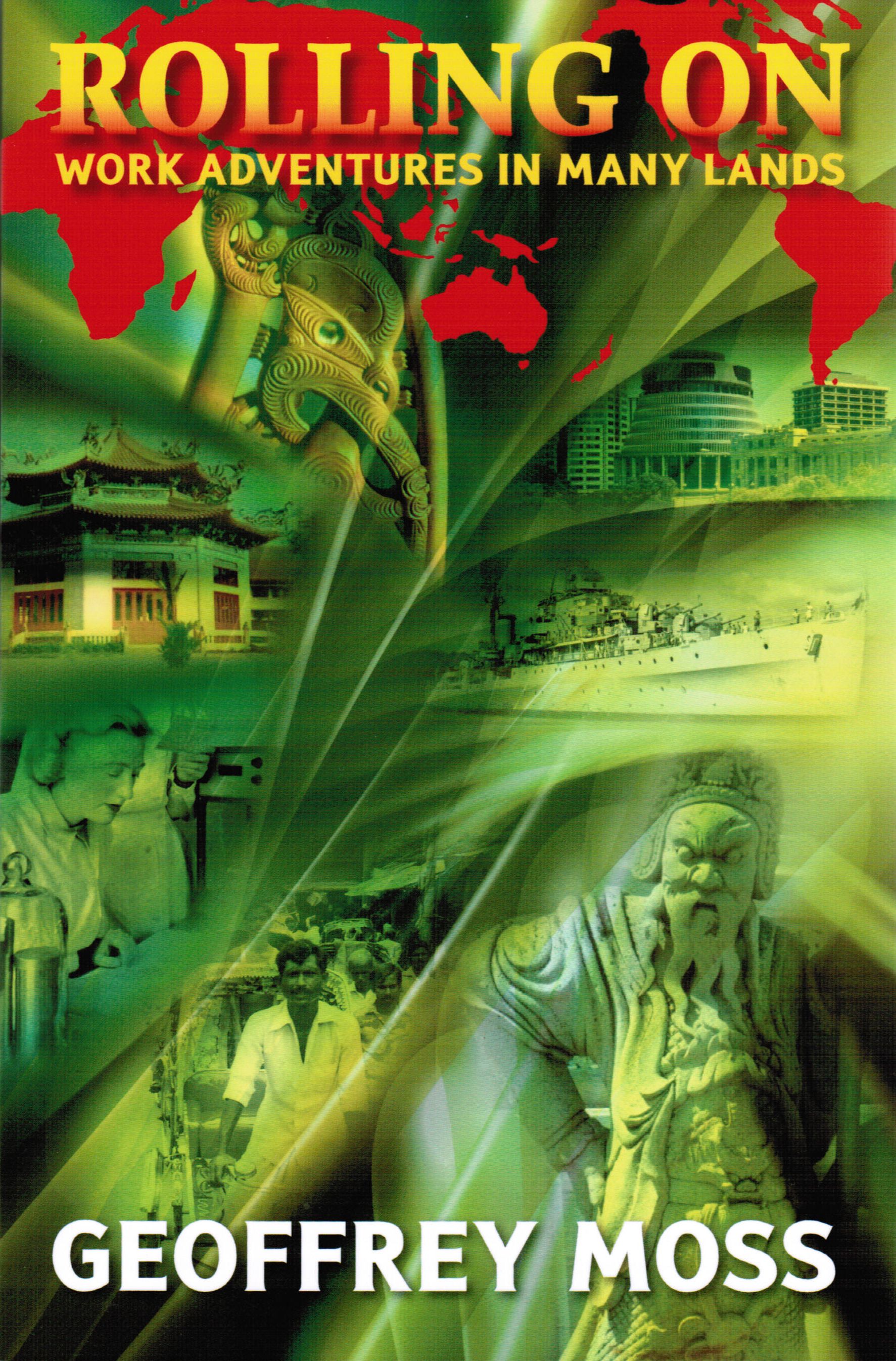
For more of these stories down-load from our website our FREE book “Rolling On- Work adventures in many lands.”
 Another Handful of Tips