Recently the country stopped working to watch a rugby game of football. It was the final of the World Cup between New Zealand and South Africa.
The winning side, South Africa, took home the William Web Ellis Gold Cup.
In 1946 I visited Rugby School and took a photo of the legendry plaque inscribed, “William Web Ellis who with a fine disregard for the rules of football as played in his time first took the ball in his arms and ran with it thus originating the distinctive features of the rugby game.”
This plaque was not erected until many years after the event so it took many years after the event to formulate this legend.
In Wallace Reyburn’s book “A History of Rugby ” he states it’s a popular misconception that during a game of soccer, Ellis first picked up the ball and ran with it.
What Ellis did in 1823 was to add a new dimension to a handling game already in existence at the school.”
Ellis after leaving Rugby went to Oxford and then into the church. There is no record of him ever attending a rugby match after he left Rugby School.
He died in obscurity and in recent years his grave was discovered amongst undergrowth in Menton in the South of France.
Legends can be made.
For many years the game was an amateur game. Played for fun and enjoyment with only one referee. Today it’s played for money with a mass of rules and a large team of referees. Many of the players now train and play hard, getting injuries for life.
Bob Stuart, an ex-All-Black captain, made the greatest contribution to the game.
Bob set up the first clinics to train rugby coaches. The first one was set up in Petone in about 1976. Some of the tutors were J.J. Stewart, Sir Alan Stewart, Hewi Tauroa, and Bill Freeman.
Bill became the first international rugby coach.
I took part in this training as I had been training trainers in both Asia and the Pacific.
The current All Blacks, at that time, took part in this exercise.
1977 Bob and Sir Alan Stewart set up the Asian and Pacific Rugby Congress held at Lincoln College.
Bob lobbied for setting up the National Competition (NPC) and was a member of a lobby group that convinced the International Board to launch the Rugby World Cup.
Bob Stuart was hired by the International Board to write a five-year plan. This laid the groundwork for the way the game is played today.
The International Board was forced to convert this amateur game into a professional game when an Australian businessman, Kerry Packer started forming a professional rugby league.
According to Bob, they had little choice but to turn professional before losing their best players to the professional game.
The present game is a mess. There are too many rules, too many referees, too many players in each game, and too many coaches.
Players now move about and play for the highest-paying country – supporters are losing interest.
Bring back the good old days!
Geoffrey Moss (mossassociates.co.nz)
“The only trouble being a ‘good sport’ is you have to lose to prove it.”
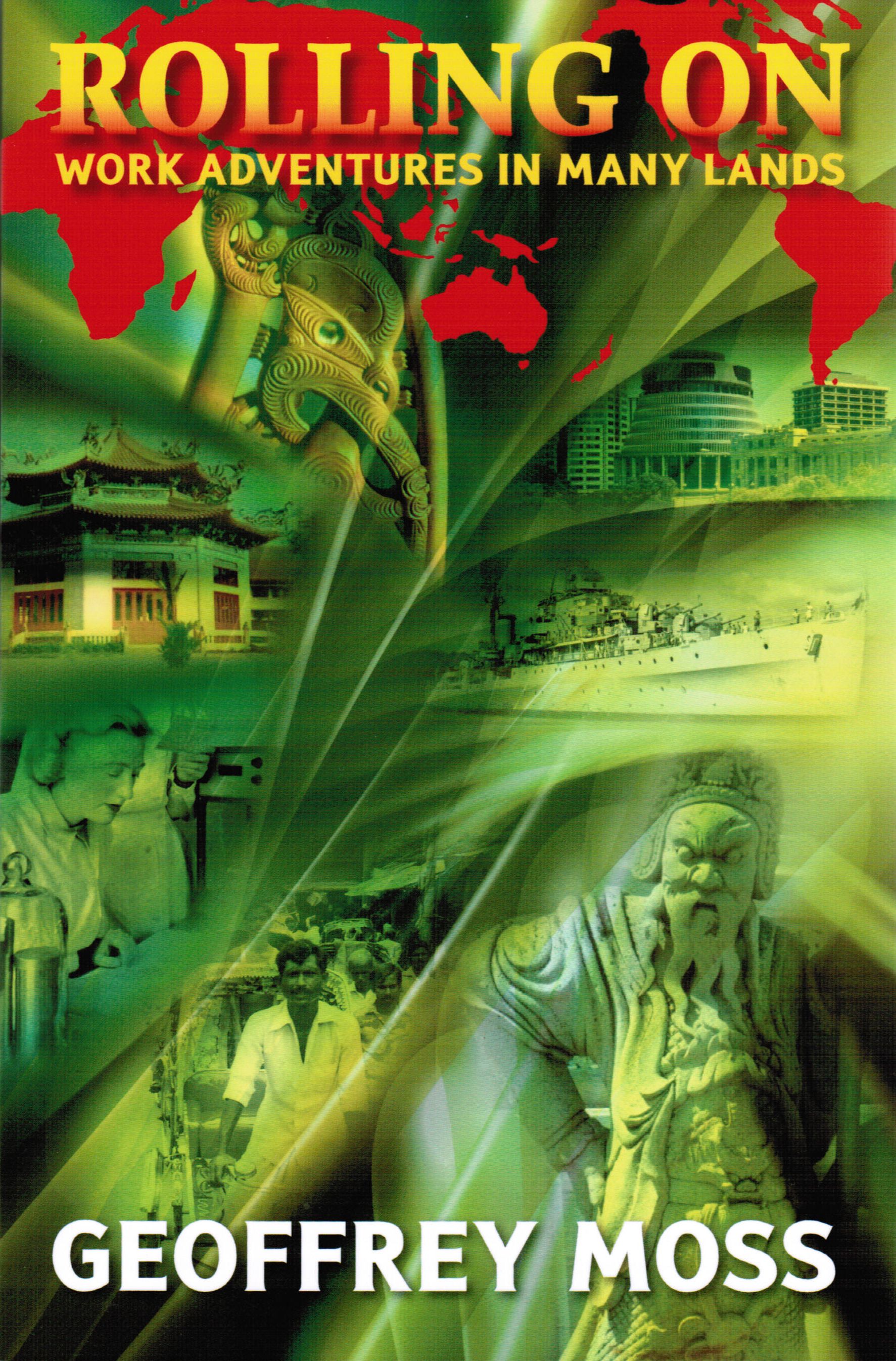
Source: “Rolling On” now available FREE from the mossassociates website.
 Another Handful of Tips
Agree with Geoff’s concluding comments.
Rugby Union is no longer a spectator sport.
Game time now makes up less than 40% of elapsed time.
We need to re vamp the rules to allow open running rugby again.
Get rid of the TMO.
LikeLike