At short notice, I was asked to go to Laos.
New Zealand had been short-listed by the Asian Development Bank to put in a team to help Laos stimulate its agriculture.
New Zealand had selected a strong team led by Dr. Neil Worker – who had held a senior position at the World Bank.
My role was to collect information to help support our application.
I had a long stopover in Bangkok while waiting for the next plane into Vientiane.
I visited my old haunts, such as the Food and Agriculture Organisation (FAO) library, but could get little information from them.
I found out that one of my ex-UN colleagues had been working in Laos and had an association with a development firm. Prathana visited me at my hotel and said he would contact them to see if they could help me.
Shortly after I arrived in Vientiane I had a call from the Managing Director of the Societe Lao Internationale setting up a meeting.
He said he would make contacts for me and set up appointments. He even offered me an interpreter. The interrupter was a Finnish medical doctor, Henrick Forss.
We got on well together. I enjoyed his company. He made many appointments for me, including with the appropriate Minister and the head of the FAO in Laos.
After five hard days of collecting information, it was time to head home.
Earlier I discovered when I had flown to Vientiane from Bangkok the second page of my ticket, the return part, had been ripped out. I was not sure if it was deliberate or accidental. That meant I needed to buy a new return ticket to Bangkok.
At the airport, it was fortunate that Henrik saw the soldiers march me away when my papers were examined at the reception desk.
Henrik forced his way into the interview room and after a lengthy plea on my behalf we settled for a fine of US $10 and I was released.
My crime was a visa violation. My visa, written in Lao, which I couldn’t read, was for 48 hours. I stayed for five days.
Henrick whispered, to me; ” Go to the toilet when you get back to the holding room. You will find a door next to the toilet. Open it and climb the stairs. It goes up to the bar. I will have a cold beer waiting for you.”
In the bar he said; “If your country really wants that contract, when you get home send a telex to this number,” he said slipping me a piece of paper.
“Tell us how much ‘administrative’ fees you are prepared to pay. We will see the correct officials get their share after you get the contract. That’s how other countries will do it.”
Did we pay the bribe? No!
Did we get the contract? No!
The reason we were given was none of our team spoke Lao.
Because bribes are expected in many Asian and Pacific countries, it is a common practice for consulting organisations to employ local agencies to look after the ‘traditional business practices’.
Many officials are poorly paid and need extra money to live.
New Zealand is a country where we don’t believe in bribery. Long may it last!
Geoffrey Moss(mossassociates.co.nz)
“Honesty is always the safest, and the best policy.”
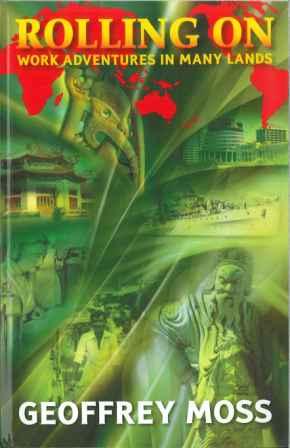
For more information on this anecdote download my FREE book “Rolling On – Work Adventures in Many Lands” on our website.
 Another Handful of Tips