Jaffna in Sri Lanka 1978
When you see a platoon of soldiers pointing rifles at you it does tend to focus the mind. This happened not once, but three times on our eight-hour drive from Kandy to Jaffna.
At the time we did not realize it but we must have been one of the last groups to visit an area that was soon to become a battle zone.
On a previous visit to Sri Lanka, I had identified a need for management training in the Department of Agriculture. On this trip, I returned with Gordon Rabey to assist with the training. We were to run two different workshops. The first one was to refresh the training leaders I had worked with on a previous mission. The second was to run one on management skills.
We had a week off between workshops and Mr. Natesan, the Deputy Director in Agriculture, and Sundara Moorthy, one of my assistants from a previous workshop, suggested we should visit Jaffna.
Looking back on this I now believe it was an excuse for them to pay an official visit to see their families.
It was a long eight-hour drive and we kept being stopped to show our papers and to give reasons for our visit. When we arrived we were weary and were ushered into a big hall full of people. There was an armed guard on the door.
We were escorted onto the stage and offered refreshments, bananas, biscuits, and very sweet buffalo-curd tea. We were expected to address the audience and tell them how they could improve their food production. How would we know, we had only just arrived!
Next, we were taken to our accommodation at the Subhas Tourist Hotel. It obviously hadn’t seen guests for some time and our team of supporters made them re-clean our rooms before we were permitted to enter. While this was going on we were taken to a pond where some of our party had a swim. I believe it had some religious significance. When we saw the colour of the water we were not interested in a dip.
Jaffna is a very very old city. It has been inhabited by Tamils since 204 B.C. It had at that stage a similar population as my hometown, Wellington, New Zealand. We found the people we met were well educated and conscientious.
It’s a farming center with fertile soils. Once the coral rocks are removed they grow crops such as onions, tobacco, potatoes, chilies, and rice, largely for the southern markets.
Being the only guests in the hotel we were given a first-class European breakfast. We were hungry so we tucked in. Our colleagues sat and watched us eat.
After breakfast, we were taken to two of their homes. To our horror, the wives and family had prepared very large breakfasts for us containing many delicious foods, such as string hoppers, egg hoppers, and many local treats. If we had only been told, we could have paced ourselves to enjoy these treats. Our food became an ordeal!
The people were all very kind and generous to us. For lunch, one day we were taken to a Tamil Women’s Farm School run by a Mrs. Seguaratnam. We inspected the 15 acres of crops grown by the girls. She took us into her home, cooked and served us a meal. While waiting for the meal we were entertained by her father, a retired headmaster of a boy’s school. He showed us how to make cigars from dried tobacco leaves by rolling them on his leg.
He said he had recently visited his son in London. His son was the Chief Engineer of the London City Council. When he arrived at Heathrow he was met by one of his former pupils who insisted on carrying his bags. He was the Chief Medical Officer at the airport. It says much for their standard of education in Jaffna.
Another place we visited was the Milk White Soap factory. The soap they were making was blue. They added Reckett’s blue to the coconut oil soap to help make their clothes look sparkling white.
We were taken to a beach to be shown how the Tamil Tigers brought their supplies in from India. They were brought in on wooden rafts made of logs that lay largely underwater so they could get in under a radar screen.
As a treat, we were taken to a beautiful beach for a swim. We were enjoying it until a stepped on something thinking it was a piece of corral I picked it up only to find it was a human skull with some brain matter still attached. Gordon couldn’t make out why I was in such a hurry to get out of the water. Morty hadn’t bothered to tell us this was the beach where the remains of the cremations were put to sea so the souls of the departed could go to their final destination.
On our return to Jaffna, we saw bodies being burned beside the road. I found this a traumatic experience.
Shortly after our visit, the army moved into Jaffna to kill the Tamil Tigers. Many people were slaughtered.
I have carried out ten missions to Sri Lanka and seen many events during this civil war. Many terrible things happened between the Tamils and the Sinhalese. The Tamils were seeking an independent homeland, This was not a practical proposition as they make up only about 15% of the population.
Sri Lanka is a beautiful country and there are some wonderful people living there, but many of the politicians are corrupt. No wonder so many leave this beautiful island to work in other lands. I wonder how many of the people I befriended in Jaffna are still alive today?
Geoffrey Moss(mossasssociates.co.nz)
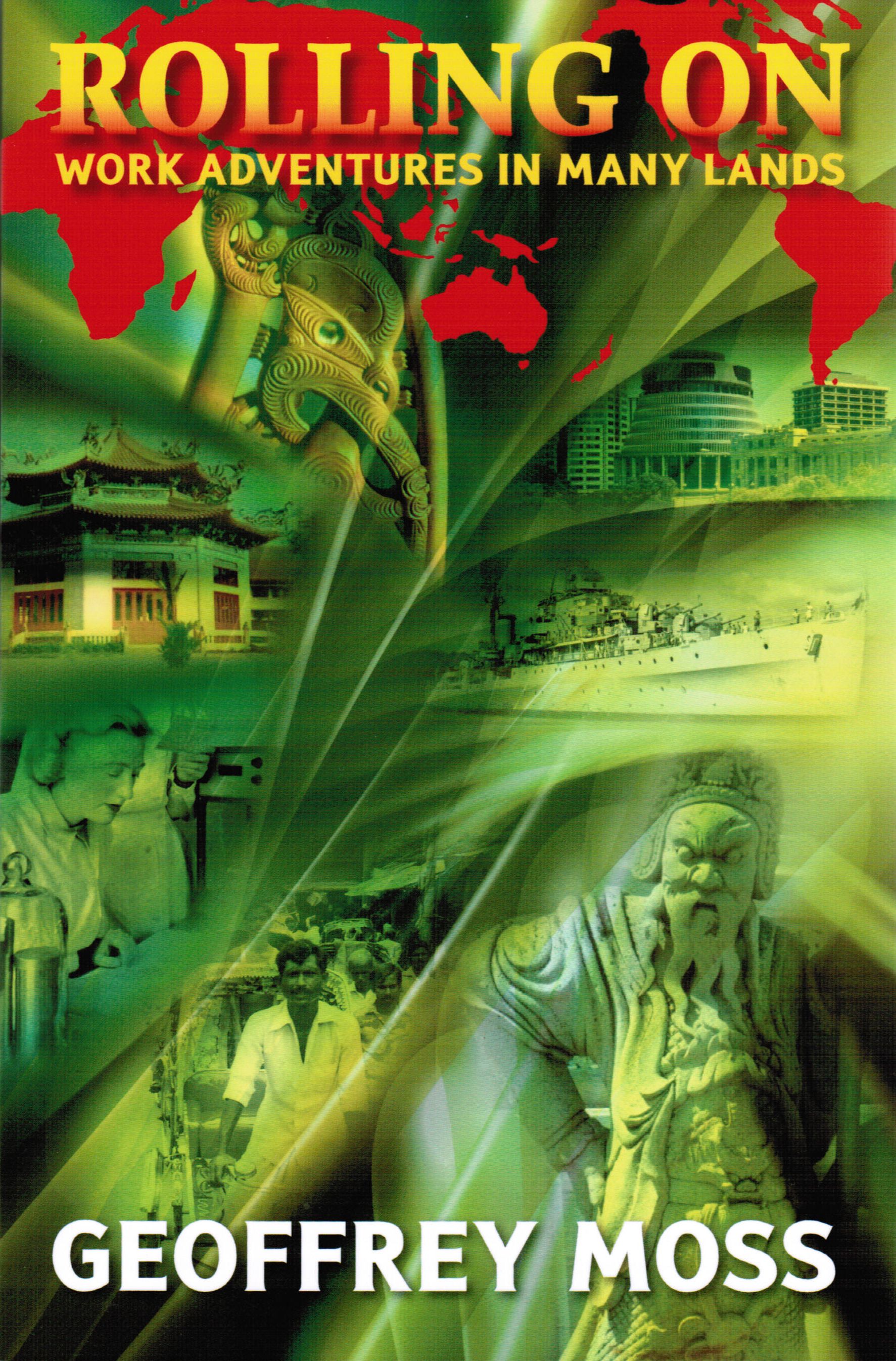
For more of these stories download my FREE book “Rolling On – Work adventures in many lands” available from our website.


Fascinating reflections. How things change
LikeLiked by 1 person