Moss Memories 18 – Singapore (1978/2006)
I arrived in Singapore at 2a.m. I was very tired, having done a day’s work in Auckland before departing. When I arrived at the Holiday Inn counter I was shocked to find I did not have my wallet containing my money, papers, and passport. I must have left them in the taxi, and I didn’t even know what colour the taxi was.
Within an hour, the hotel had identified the taxi and had the wallet returned. Nothing was missing. That says something about Singapore!
I have visited Singapore, at least forty times, Let me explain why.
Initially, I carried out many aid missions for the New Zealand Government, mainly to Sri Lanka where New Zealand was supporting the development of food production. The New Zealand embassy in Singapore was also the embassy for Sri Lanka, so it was necessary to call in for briefings going to and returning from Colombo.
Mostly I flew to Singapore (30 times) to run three-day workshops for Asian managers at the Singapore Institute of Management.
We also had four different book publishers in Singapore, and Moss Associates Ltd., printed books there as well.
Joyce and I had also flown in to attend an Eisenhower Fellows Asian conference. We got into many places no tourist couldn’t get into, such as their international research centers employing some 2,000 scientists.
Singapore is an amazing place. It has a similar population to New Zealand and is slightly bigger than our largest lake. Apart from a good location, it doesn’t have any natural resources.
I enjoyed working for the Singapore Institute of Management. It was a remarkable place. It grants degrees from many well-known international universities. Singaporeans can get an international qualification without leaving home.
Tutors were brought in from around the world and were well looked after. We even had our own recreation and study lounge at SIM.
After each workshop, participants carried out comprehensive evaluations to make sure the training given was relevant to the participant’s needs. This made it a great place to experiment with different training ways.
Most of the participants at the workshops were composed of people from many different countries meaning training was competitive. We learned much from each other.
I gave my workshops a smorgasbord of topics and let the participants choose their own training needs and priorities.
To start with I was apprehensive about the knowledge and experiences of some of the participants until I realized what a great resource we had to draw from. Ideal for workshop-type training. I learned much from the participants as many were very senior managers of large companies.
After a workshop, the participants were encouraged to formulate their own personal development plans.
Each manager received a copy of our book “Managing for Tomorrow”, published by S.I.M. It summarised the topics covered in the workshop.
It was recommended when they went home they spend one hour each night, for two weeks, reading one chapter, and filling in their plans, in the “Reflect, Review and Do” sections at the end of each chapter.
If done conscientiously, they would have produced their own practical working plan to help bring about changes within their organisation.
At one workshop Lt. Colonel Lee Chong Kiat, the General Manager (Operations) of the Batamindo Industrial Park was a participant. He offered to take me over to Indonesia to inspect this park.
He made all arrangements. He collected us from our hotel and took us by car, ferry and car again into a heavily armed compound in Indonesia.
The industrial park covered 320 hectares and had six different types of factories for rent by a joint Singapore – Indonesian company. They had 230 factories operating at the time of this visit.
Companies hired a factory. Everything was supplied, such as skilled labour, power, water, accommodation, transport, security, banking, recreation, and study facilities for the workers.
As we drove around I noted factory names like Panasonic, Philips, Thomson, AIWA, and Nokia. These factories work three eight-hour shifts each day for 365 days a year. By working hard for a limited time young people were making big money to help them get a good start. Perhaps it was a good way to pay off a mortgage-free house.
I enjoyed working in Singapore. Other countries have many lessons to learn from Singapore if they examine this country in some depth and don’t judge by it by media reports.
Geoffrey Moss(mossassociates.co.nz)
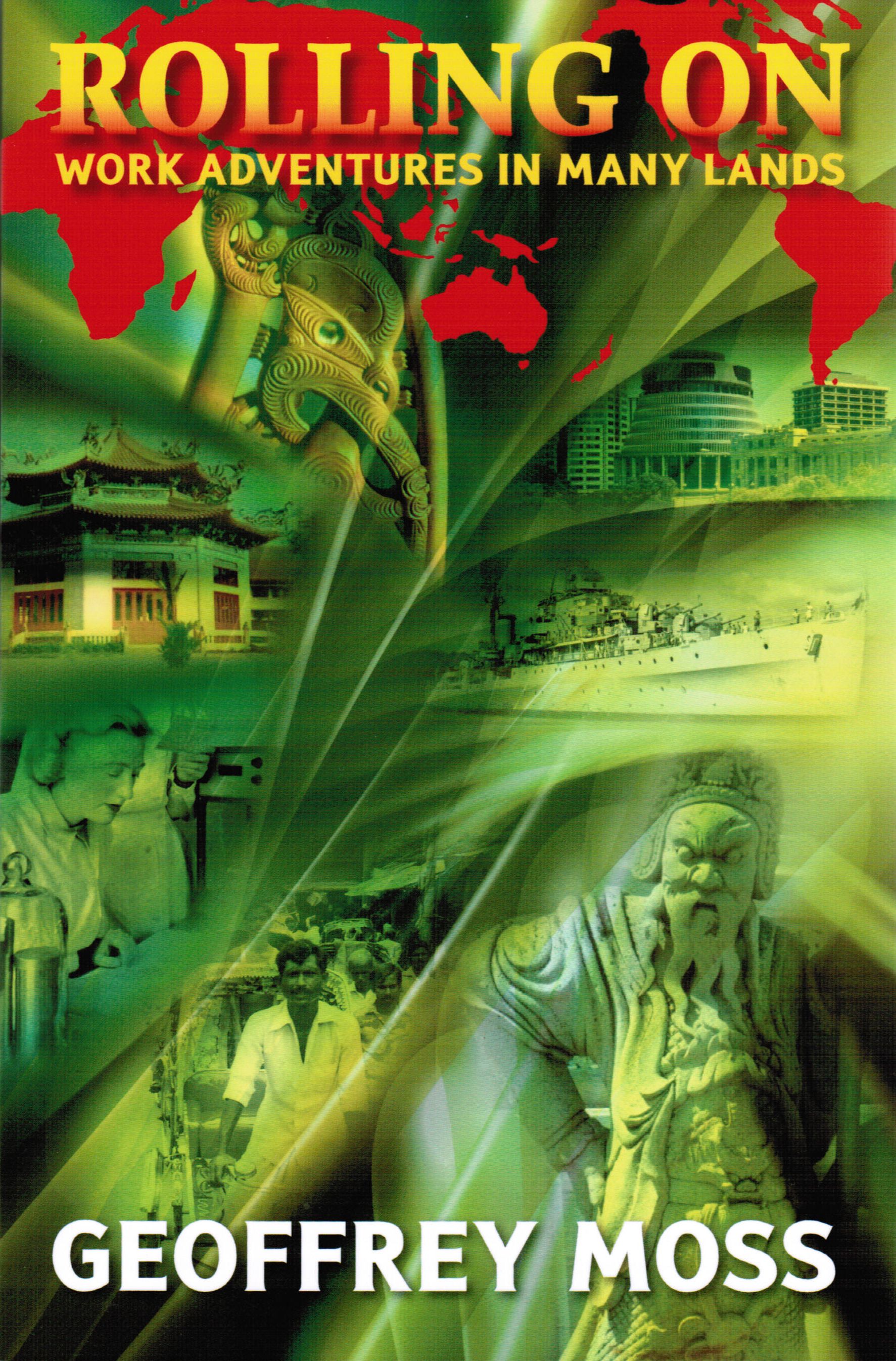
For more on this topic see our FREE book “Rolling On “available from our website on Google.
 Another Handful of Tips
Geoff has so much experience to share.
With many years spent in Asia teaching at universities his advice is well founded.
Check out some of his publications- you will be well rewarded.
LikeLiked by 1 person