Q&A – Moss Memories 35 – Spirit Voices
Most people do not realize that at one stage we were expecting an invasion by the Japanese as their forces swept south. Australia was being bombed. Sydney Harbour was invaded by Japanese submarines.
in 1942, at the age of sixteen, I was a Lance Corporal in the Normanby Home Guard.
New Zealand was busy digging slit trenches and school children were given lessons on what to do if we were bombed.
Enemy mines were being laid around our coast and on March 8 1942 a Japanese spotter aircraft was reported flying over Wellington.
Up until 1937 navel signals were received, in and out of the Auckland Naval Base, from as far away as London, by the old cruiser HMS Philomel
When the Philomel was disposed of the signals were sent to the radio station in Wellington on the top the Tinakori Hill.
Because of the vulnerable position of the radio station masts, they would have been one of the first targets when we were attacked.
In 1943 a large new sight was selected and the naval radio station was moved a few miles south of the large army camp at Waiouru.
At a few hours notice, I was transferred from an office on the old cruiser Philomel, tied up at the wharf, to the Pacific Fleet Radio Station near Hihitahi.
I was told a Chief Petty Officer had been caught ‘tickling kitty’ (helping himself to supplies) and I was sent off urgently to replace him.
I had a mad rush to catch the train. With the aid of mates, I was pushed onto a carriage and my duffle bag and my hammock were thrown in after me as the train was already moving. My hammock contained my mattress and blanket and was lashed up like a big fat banana.
In those days trains were overloaded due to petrol rationing. You just grabbed a seat when one became available.
Can you imagine getting off the train at night in the cold winter weather and hanging about waiting for a truck to collect you to take you to an unknown posting to a naval station in such an isolated region, four miles south of Waiouru.
What I found was an interesting station. We had a crew of about 150. I bunked in a two-man, well-heated cabin. I had a comfortable office to do the victualling (ordering food and making up menus) and issue the rum rations. I also had clothing, and electrical stores to look after.
The camp contained a receiving station and two transmitting stations covering some 20 acres. A dozen or more circuits were manned continuously and teleprinter landlines fed thousands of signals to the coders and cipherers at Navy Office in Wellington. It was a busy station. Japanese messages were captured for decoding.
Our home ‘port’ was Taihape. Can you imagine hearing over the loudspeaker the call “Liberty men will fall in for inspection at 09hundred hours! The boat will depart at 0915 for Taihape.” Our liberty boat was a truck with four wheels.
As a teenager, I did enjoy the challenge. I had fun. I went rabbit shooting and we had a great sport rock hopping along the streams. I played in the Navy rugby team in the Taihape competition – not very successfully.
A girlfriend from Waitotara was now living in Taihape so I had someone to take to dances and to pictures.
One day a Harvard plane crashed on the prison farm near Turangi. I was given a rifle and some rations and told to guard it until the Air force turned up to collect it. I slept in the cockpit. The area was full of rabbits.
Another day we were taken to a gala event held in the Mangamonoho domain. They had some strange events including a running race over the horse jumps. I entered and won this event. The prize was cash – I had become a professional runner.
By the time I had taken my mates and the other runners to the pub to shout them a beer I was well out of pocket.
In 1951 the station was redesignated from Cook 3 to HMNZS Irirangi. Irirangi is a Maori word meaning ‘spirit voice’
Following these experiences, I was awarded a sea-going job on HMS Achillies. We traveled around all of New Zealand’s major ports then on to Sheerness and Chatham in England – some memorable days.
Geoffrey Moss(mossassociates.co.nz)
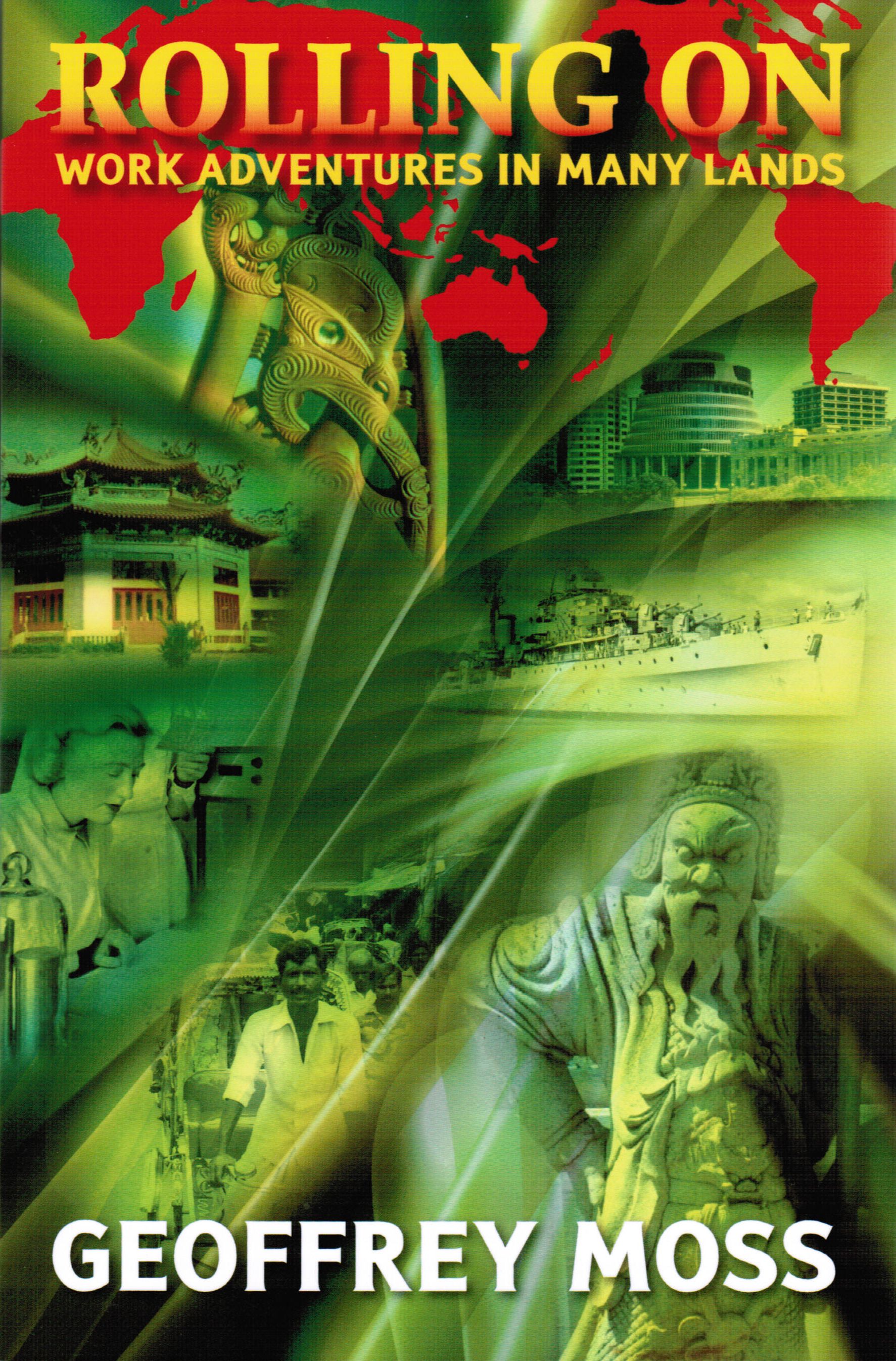
For more stories call up our FREE book “Rolling On – Work adventures in many lands” available on our website.
 Another Handful of Tips
Really special memories shared here.
LikeLike