After working in the Whanganui district for six years I became tired of driving on backcountry roads, never being home with the family, and spending too many nights living in uncomfortable boarding houses in Ohakune and in Taihape pubs. I applied for a job overseas as a Trade Commissioner and had been called down to Wellington for an interview.
At the same time, the Department of Agriculture offered me a senior advisory job in Taranaki. I am not sure if one thing led to the other but I declined the interview and we headed for North Taranaki.
When heading for New Plymouth we called in to visit the Olivers – they lived on the outskirts of the city.
June had worked with Joyce as her technician at one stage. We were seeking their advice on the best places to live in New Plymouth.
Rodney took me to the next section, helped me stand on a tree stump, and said, “Have you ever seen a view like that?” I was carried away. I had never seen a view like that before. Mount Egmont, now called Mount Taranaki, was out in all her glory. At the bottom of the section, there was a sparking river flowing and we had a wonderful view of the farmlands. “I think you can buy this section”, said Rodney.
Believe it or not, within forty-eight hours we had bought the section, engaged a builder, decided on a house plan, and got approval from the State Advances Cooperation for a Rehab Loan. Now you couldn’t do that today!
I found out I had been in the same class at school in Hastings with Bruce Simpkin, our builder. Bruce even lent us his beach cottage at Bell Block to live in while he built our new house.
I spent the next six months cleaning up the section, cutting and burning, and laying down a lawn while Bruce and his partner build the house. I even engaged a bulldozer driver to lay down a track to the lower part of the large section. It was all go and hard work.
The new role was very different from my previous job. I suddenly found I was a judge at an A&P Show. I was seconded on to the executive of the regional committee of Federated Farmers and on to the Marginal Lands Board. I now had to report on all farm fatal accidents as well as to organise the Young Farmers clubs. I was even on the Rugby Park committee as their turf advisor – talk about ‘Jack of all trades.
I purchased a little VW beetle. I found it ideal for the job as it was a great machine for driving over paddocks. I owned three altogether.
At one stage I made the mistake to put some samples of good and bad silage into the front boot to demonstrate to farmer clients. I don’t think I ever got the smell out of that car.
On one memorable occasion, there was a cloud burst in the Okoki Valley. The bridge into the valley was swept away and the valley was clogged up with silt and logs. It was my task to enter the valley and report the damage to the Minister of Agriculture.
I crossed into the valley by stepping gingerly onto logs. I sloshed my way up the valley in my gumboots.
At the top of the valley, I came to a farmhouse on an island surrounded by mud and debris. The wife was in the hospital and during the deluge, the grandmother had comforted the children on the kitchen table while the mud and water had lapped the bottom of the table. There was no way out.
Fortunately, the water had receded and when I arrived they were cleaning up the mess and joking about it – I was very moved by the situation. Working with such people made a great impression on me.
Some of the Taranaki Young Farmers distinguished themselves in their later careers. Len Dury, from The Bell Block club, became the World President of Toastmasters International and Jim Bolger from the Rahotu club ended up our Prime Minister and our Ambassador in Washington D.C.
I did enjoy working in North Taranaki. It was like being paid to visit your friends.
I ran a very successful farm school at Waitara. (See my blog no 38 – Waitara, for details.) I suspect because of this I was invited to join four other Farm Advisors to attend a five months managers training course in Wellington. I accepted because I suspected the Department of Agriculture was about to split up the lower North Island region into Western and East Coast and if I got the job I would be able to stay in New Plymouth.
It was very hard on Joyce as we had three young children at that time and I was away for two out of three weeks for five months. The phone still kept ringing when I was in Wellington – farmers were still seeking advice and Joyce was trying to bathe our children and answer the phone.
During the last week of my training, my life changed dramatically.
D.N.R Webb, the Director-General, said to me, “Geoff I want you to come to Wellington as soon as possible.” I said I don’t want to come to Wellington I am very happy in Taranaki.”
He said, “Sorry you have been replaced in New Plymouth. We have invested a lot of money in your training. Now you’ve got to pay it back.”
That’s how we returned to Wellington.
Housing was very costly at the time but in the long run, it turned out to be a good move – it changed my life.
Later on, I was sent off both to Australia and to the USA for further training in ways to stimulate agriculture and in communication skills.
I didn’t fully appreciate my management training until I was asked to teach it at the University of the South Pacific.
After returning from working for the UNDP Massey University put me on their staff as a Senior Lecturer and seconded me to work in Samoa at the USP after cyclone Ofa.
The final-year students ask me to recommend a management book for them. I wasn’t able to do that so I put my lecture notes together and wrote one for them. I called it “Survival Skills for New Managers”. This book was published in many countries and in many languages.
The Singapore Institute of Management University asked me to make it into a workshop for Asian managers. I flew to Singapore 32times to run these workshops for them.
The U.S Aid people asked me to run them for Sri Lankan managers in Colombo and LDI Training in Indonesia to teach trainers how to run these workshops. Amazing!
One thing just leads to another if you just go with the flow.
Geoffrey Moss(mossassociates.co.nz)
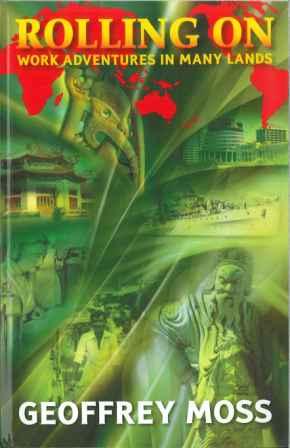


So the moral of the story is that taking hold of every opportunity leads to success.
As Geoff says going the extra mile with silage stuffed in your car boot can get you noticed!
LikeLike