Professor Ronald Henry Schwass was seconded from Massey University to the Ministry of Foreign Affairs and Trade as their Professor of Agriculture.
For twenty years he helped set up agricultural faculties at Universities in Asia and the Pacific as part of New Zealand aid programmes.
If anyone deserved to be awarded a Knighthood for his work for New Zealand it was the late Professor Schwass – but it looks like you need to be an entertainer or a sportsperson to get such an award these days.
Ron’s only awards came from the King of Thailand and a Fellowship from the New Zealand Institute of Agriculture and Horticultural Sciences.
During the Second World War Ron was a Lead Navigator flying Catalinas in the Pacific.
The Catalina Flying Boat was used for rescue missions for downed pilots and as a spotting plane looking for Japanese submarines. They played an important role in the Pacific.
I first met Ron in Palmerton North at the Seed Testing Station. I was ‘broke’ and needed to carry on my degree part-time. The Department of Agriculture had generously granted me work handy to Massey University.
I shared an office with Ron and two women scientists. One, Joyce Wharton became my wife, the other Dawn Mathew died in a DC 10 plane crash on Mount Erebus in the Antarctic.
She had been staying with us the weekend she left to catch the plane. As they had both been great friends and had cycled around England together I said to Dawn. “Why didn’t you let us know you were traveling by yourself I would have happily purchased a ticket for Joyce to have gone to Antarctica with you.”
Ron was Godfather to our eldest son, Graeme. After he left the Department he lectured me in agronomy at Massey College.
Many of my overseas adventures were due to his recommendations.
After he carried out a dangerous mission for the Ministry of Foreign Affairs in Indonesia he was sent to Northern Thailand to set up the first faculty for a new university in Khon Kaen.
Today Khon Kaen University (KKU) has 19 faculties and it has over 40,000 students.
The Thai King, King Rama 1X was delighted with what New Zealand had done and he conferred the degree of Doctor of Science in Agriculture from Khon Kaen University on both our Prime Minister, Jim Bolger, and Professor Schwass.
Ron was unable to join the Prime Minister for the award ceremony for health reasons. At that time the university suggested a Mekong Institute project. Our Ministry of Foreign Affairs and Trade gave it the green light and the New Zealand taxpayer was committed to this $18,000,000 project over five years for a four-story building and training programmes.
John Askwith was a post-graduate student from Massey University under part-supervision from Professor Schwass and had helped Ron during the early stages of development during 1972-73. He later became the Director of the Mekong Institute.
I was invited to fly to Khon Kaen to run a “Managing for Tomorrow” workshop for the Institute. It was held in the James B. Bolger room. I stayed with the Askwiths in their home during this workshop.
Professor Schwass helped set up the Food and Fertilizer Technology Center for Asia and the Pacific in Taipei, Republic of China. He was on the technical advisory board. After he developed a heart problem, I was asked to take his place.
One day I had tea with Y.S.Sun, a Past-President of Taiwan. He asked after Ron Schwass and told me much he had appreciated his advice when he was the President.
For three years I attend, and presented papers, at their annual meetings. I learned much and was able to use this knowledge when working in developing countries, such as Bangladesh and Sri Lanka.
My first mission to Western Samoa in 1980 was organised by Professor Schwass. Ron had played a major role in setting up the Alafua Agriculture College for the University of the South Pacific. He was greatly respected.
He arranged for me to meet the Directors of Agriculture from the Pacific countries during one of their annual meetings at Alafua on the outskirts of Apia.
I was asked to make a presentation to them on ways they could improve their extension services and stimulate food production. I had run a five-week workshop on this subject in Sri Lanka and had a paper published on this topic for Guelph University in Canada.
It was not an easy presentation as some of the Directors saw it as criticism of their activities. Ultimately my recommendations were accepted and later I returned for my first of four training and teaching assignments in Samoa. The longest was for five months.
One of my hardest tasks was to give the eulogy at Ron’s funeral service. Eulogies are difficult at any time – you rarely get more than a few hours to prepare a summary of a person’s life achievements.
It was a small funeral service held at the village church in Eastbourne. Here was a man who made a major contribution for New Zealand, both in Asia and in the Pacific, and was virtually unknown in his own country and his only significant award came from the King of Thailand.
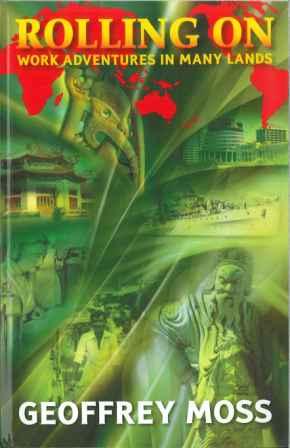
Geoffrey Moss(mossassociates.co.nz)
 Another Handful of Tips
Lovely memories.
LikeLike